Our approach
Every shirt starts with an order at the bar.

The idea
A plate, not a graphic.
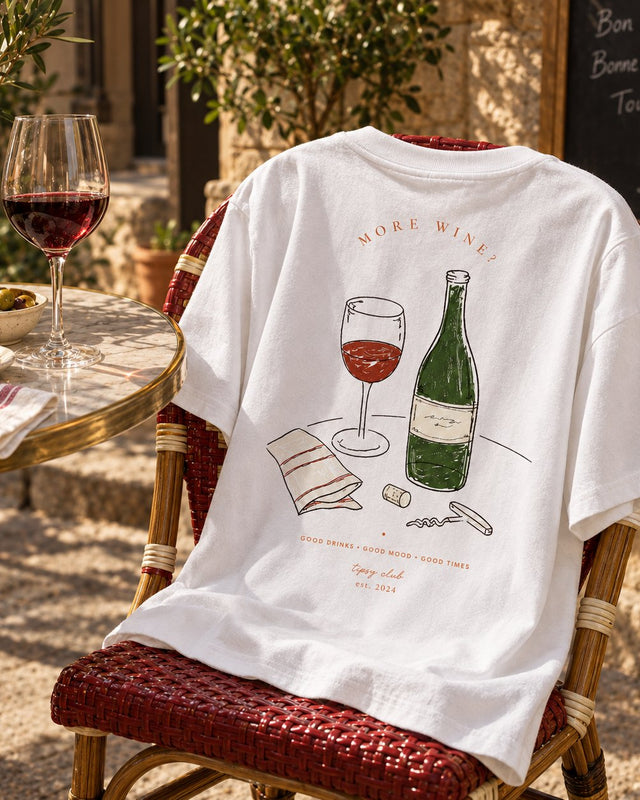
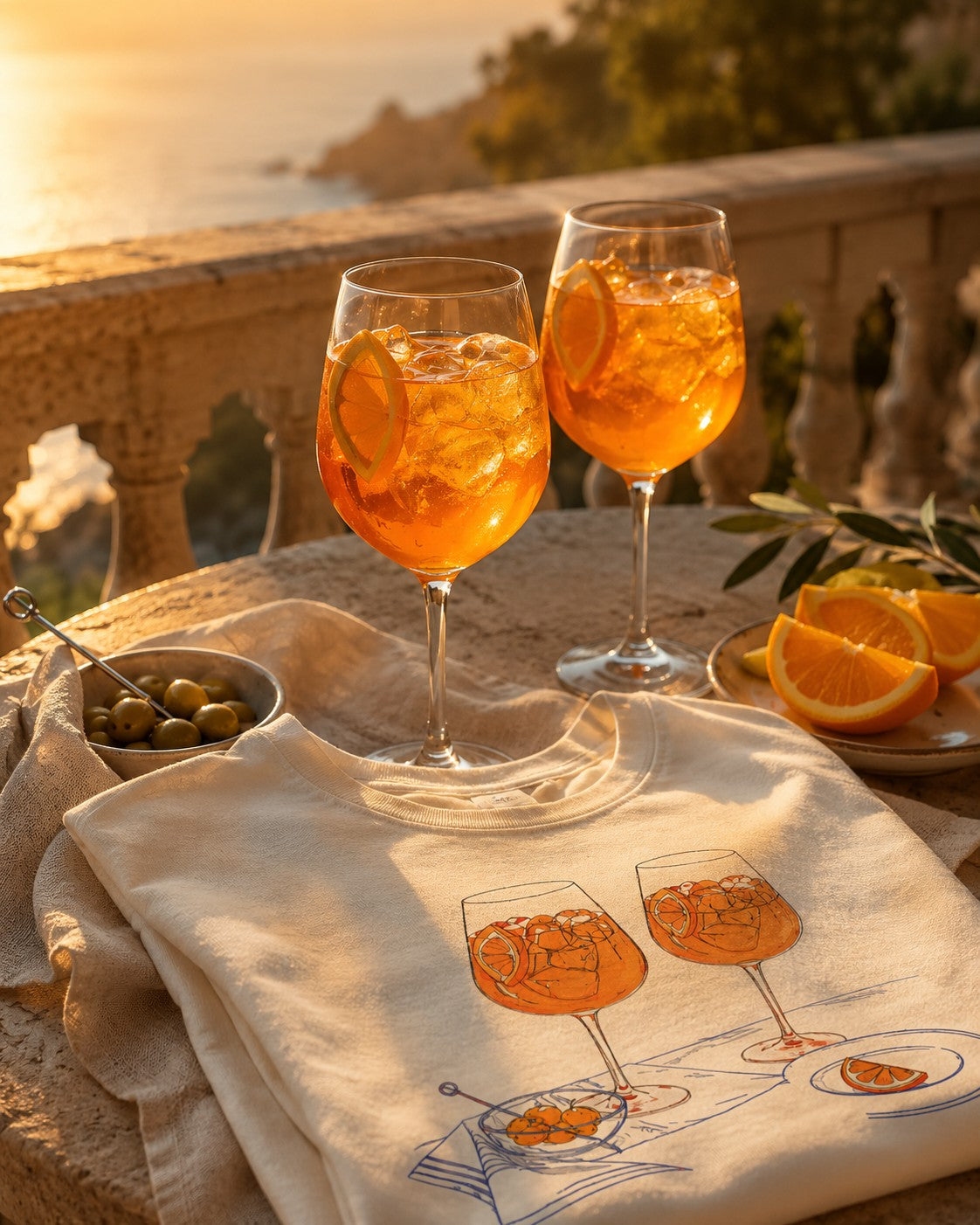
Most printed tees start from an image and go looking for a garment. We start from something we would order again — a Negroni, a plate of sardines, a lemon on the table — and lay it out the way a good bar sets its menu: the drink or the dish, its name, a line from the club, and room to breathe.
How a plate is made
From the order to the print file.
-
It starts with an order.
A drink or a dish we would happily order again, and the details that make it recognisable: the glass, the garnish, the way it is served. Where a cocktail has an official specification, the recipe in the Bar Book follows it to the millilitre.
17 plates, three collections

-
Composed for the back.
Each plate is designed in our studio with digital tools, generative image tools among them, then corrected and recomposed until it reads from across a terrace and still holds up close. The small Tipsy. script goes on the chest.
Designed in-house

-
Rebuilt for print.
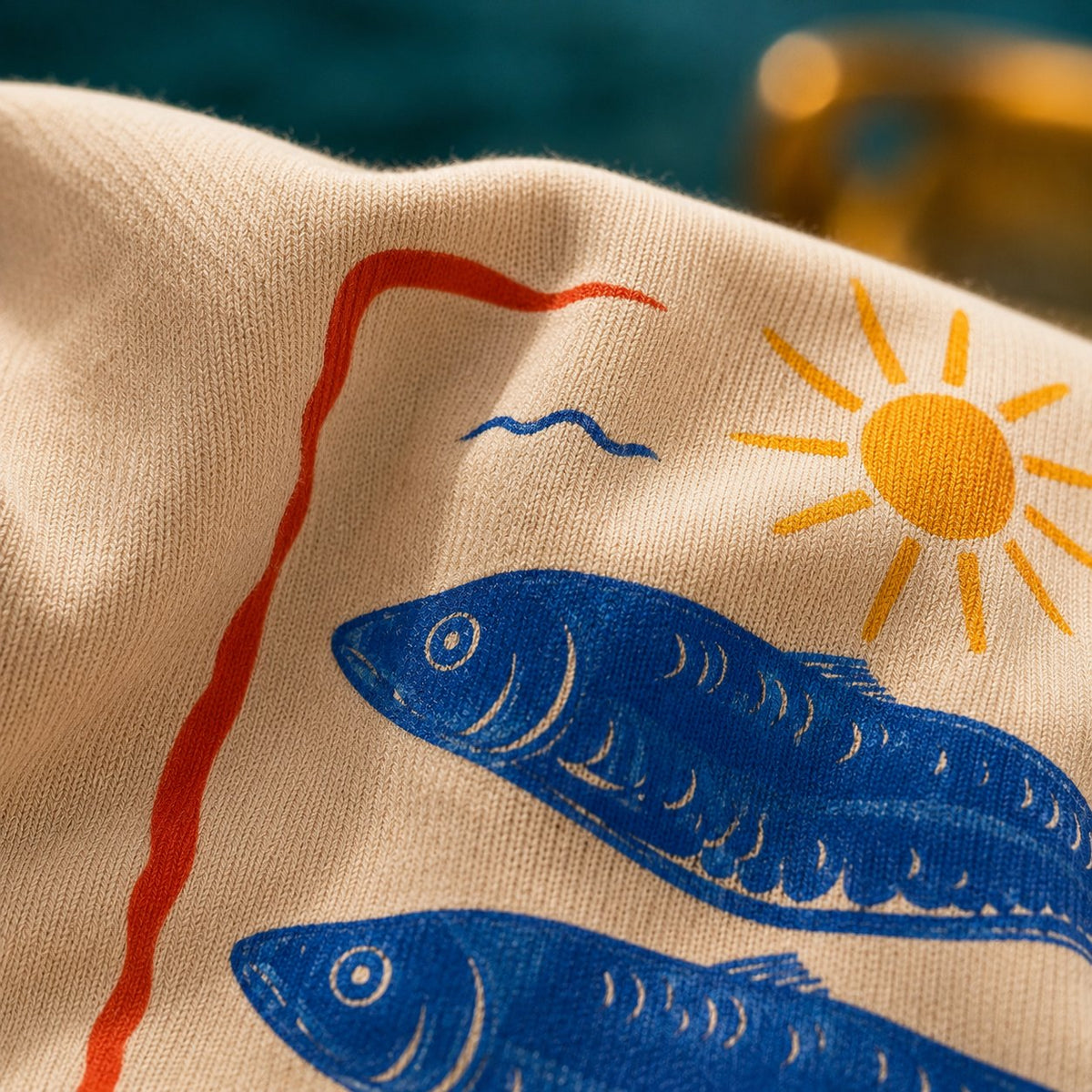
A screen image is not a print file. Every design is rebuilt for a back print about 30 cm wide: line work is vectorised so edges stay sharp, painted textures are enlarged so they keep their grain, and the background is removed so only ink touches the cotton.
About 300 dpi at full size
-
Printed once you order it.
Nothing is made in advance. Your tee is printed after you order, on heavyweight combed cotton, then packed and shipped with tracking. It adds a few days at the start and leaves no unsold stock at the end.
2 to 4 working days before it ships


The cloth
Weight you can feel in the hand.
100% combed cotton at 280 g/m², reactive-dyed and pre-shrunk. Many everyday tees sit between 150 and 180 g/m². The difference shows in the drape: a hem that hangs straight and a body that keeps its shape after washing.
- 280 g/m² combed cotton, pre-shrunk
- Reactive-dyed, so the colour goes through the fibre
- Our own designs, printed front and back
- Boxy unisex cut, S to XXL